Decide what success means before printing
A QR code on a poster, package or receipt gives someone a quick way to open a destination. It does not, by itself, show whether that person bought anything. Before launching a campaign, name the action you want people to take. A restaurant might want menu visits, while a retailer might want coupon redemptions or completed purchases. Those are different goals and need different measurements.
Choose one primary outcome and a few supporting measures. For a printed offer, the primary outcome might be redeemed offers; supporting measures could include landing-page visits and taps on the offer button. This keeps the reporting useful when a code attracts attention but few people complete the intended action. It also gives you a reason to check whether the page, offer or instructions need improvement.
Understand what each number counts
A scan is often an estimate based on a measurable event, such as a request to a redirect link. It is not necessarily a count of unique people. One person may scan twice, preview a link without continuing or share it with someone else. If a QR code points directly to a page without a measurable redirect, your website analytics may record visits but may not identify every attempt to scan the code.
A visit means the destination page loaded and was recorded by your analytics setup. A conversion is a defined action, such as submitting a form or completing a purchase. Even a recorded conversion does not automatically prove the QR code caused it: someone might already have planned to buy. Report the measures separately—scans or redirect requests, page visits and completed actions—and describe how each was counted.
Give each placement a clear path
If you want to compare a window sign with a checkout card, give each placement its own QR destination or its own campaign-tagged link. Both can lead to the same customer-facing page while carrying different labels in your analytics. Use short, consistent names, such as “window” and “checkout,” and keep a record of which printed code uses which link. Test the finished print file as well as the link before distributing it.
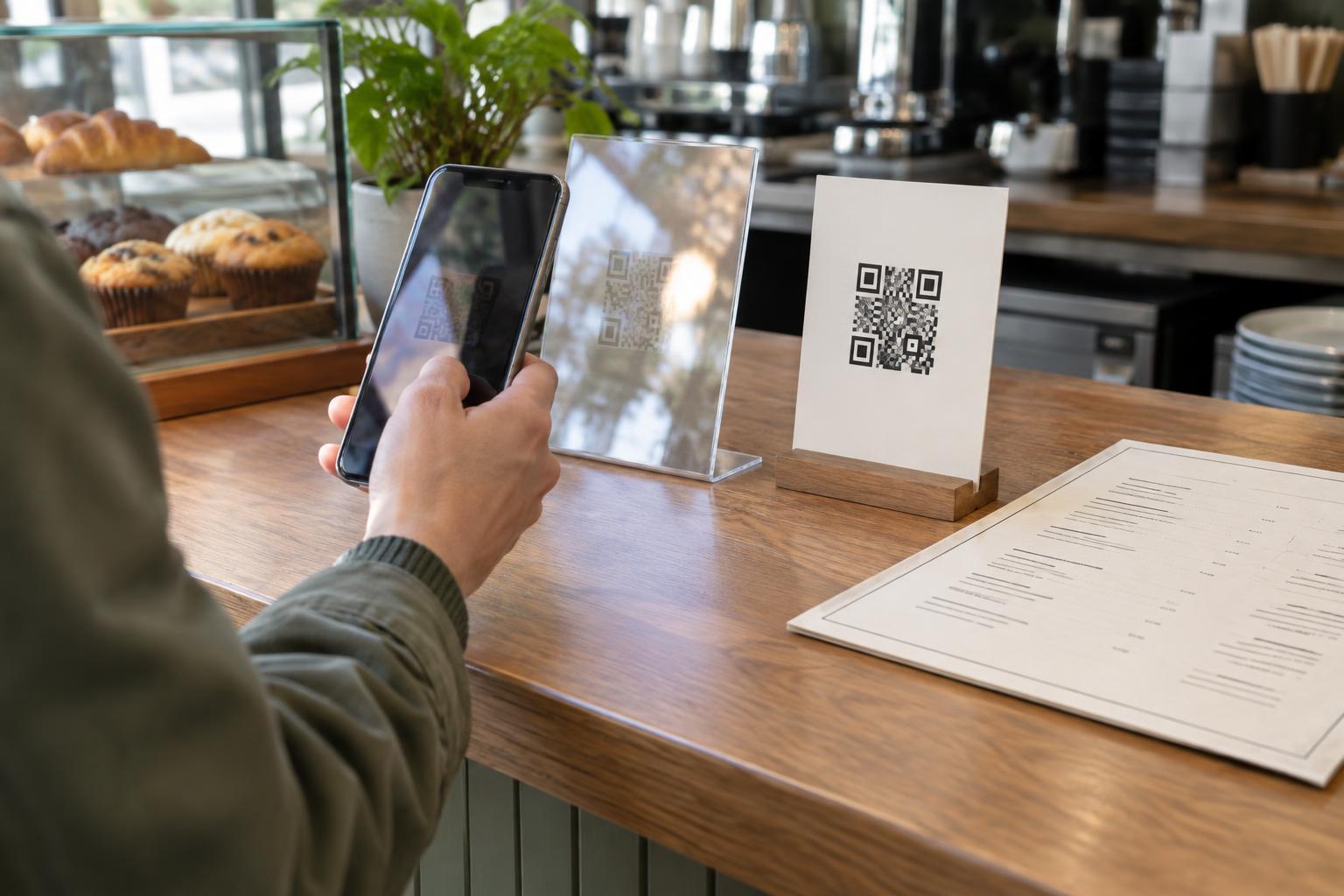
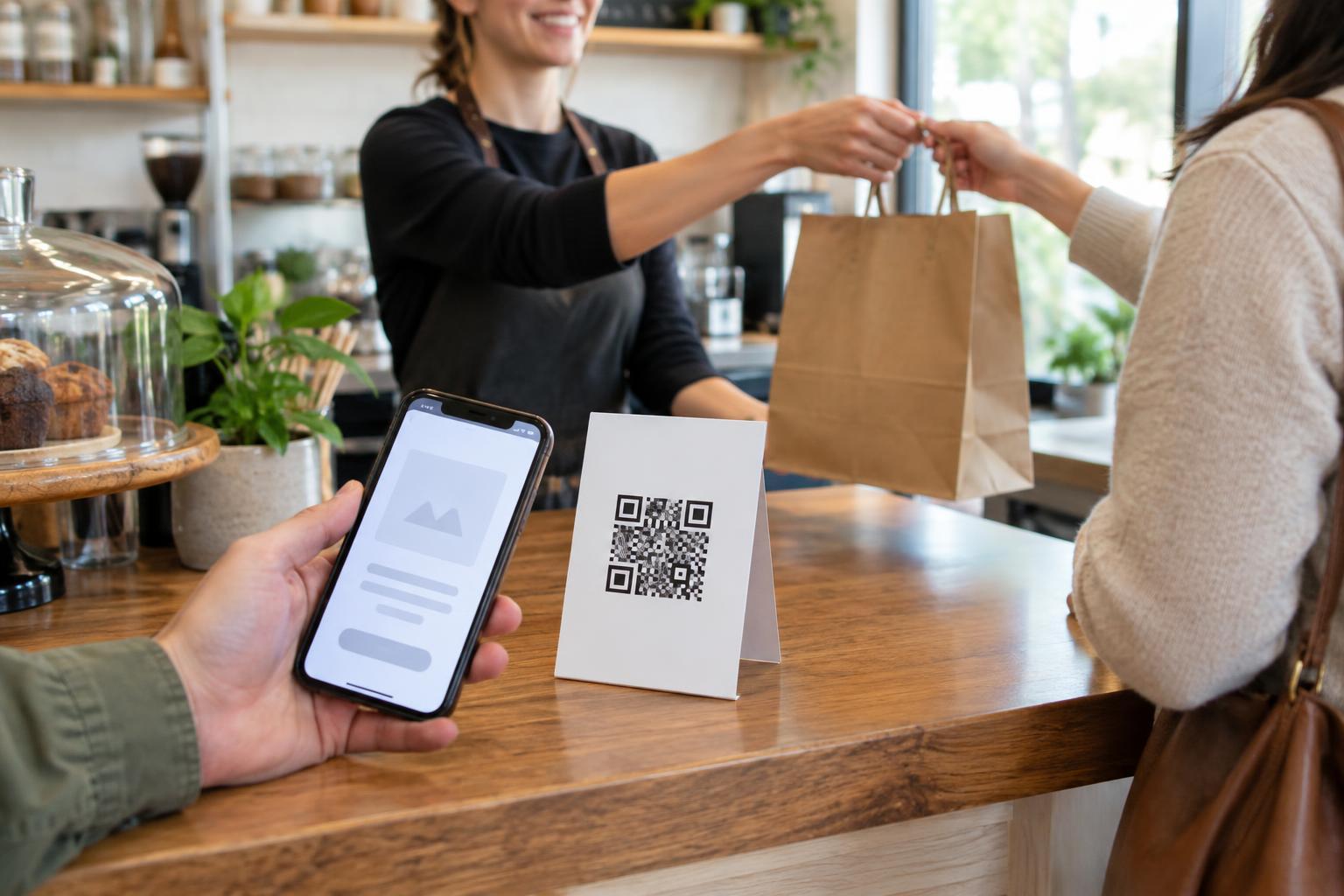
For example, a café could put one code on a table card and another on a takeaway sleeve. If the table-card link produces more visits, that suggests more activity from that route; it does not establish that table cards generated more sales. To measure use of an offer, the café could track redemptions through its checkout process. If customers may see both placements, avoid treating their results as entirely separate groups of people.
Make the next step easy to complete
Measurement works best when the destination matches the promise beside the code. A label such as “Scan to see today’s menu” should open the menu, not a general homepage that makes visitors search again. Use a mobile-friendly page with a clear next action and avoid adding unnecessary steps just to collect data. A slow or confusing page can reduce completed actions even when people are willing to scan.
Print design matters too. Leave clear space around the code, use strong contrast, choose a size that suits the likely scanning distance and test it in the lighting and location where customers will encounter it. Provide a short written alternative, such as a memorable page address, for people who cannot or prefer not to scan. Results from the QR link will not capture everyone who uses that alternative, so account for that gap when reviewing the campaign.
Review results with context and respect for privacy
Compare placements over a sensible period, noting differences in visibility, foot traffic, offers and how long each code was displayed. A code used on hundreds of packages has a different opportunity to be seen from one on a single counter sign. Look for patterns that suggest a practical change—clearer wording, a better position or a simpler landing page—rather than declaring a winner from raw scan totals alone.
Collect only the information needed for the campaign and follow your applicable privacy requirements when using analytics, cookies or customer details. Be clear about what a form asks for and why. In a final report, use precise language: “This placement recorded more visits” is more defensible than “This placement made more people buy” unless your sales measurement supports that conclusion. QR data is most valuable when it helps you ask better questions, not when it turns every scan into a claimed sale.